Friday, November 25, 2016

Five most interesting search news stories of the week

Welcome to our weekly round-up of all the latest news and research from the world of search marketing and beyond.


Whether you're taking a break from Black Friday shopping mania, recovering from a post-Thanksgiving food coma, or just getting on with your normal working day because you're in one of those boring countries that doesn't celebrate Turkey Day (*raises hand*), we've got all of the most up-to-the-minute search news for your reading pleasure.


This week, Google has released some canny changes to AdWords ahead of Black Friday, introverts have a new best friend in the form of real-time Popular Times data, and we take a look at the steps Facebook has taken so far to tackle the issue of fake news.


Google releases new AdWords improvements and stats ahead of Black Friday


As retailers around the world look to cash in on the annual shopping frenzy that is Black Friday, you can be sure that Google, at least, will be raking it in. Ahead of this year's Black Friday, Google has released additional store visits data to the AdWords location extension, allowing retailers to see exactly how far away people are from their store when they perform a search.


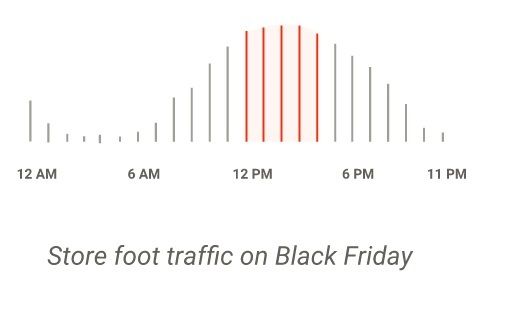
It also published a bumper crop of Black Friday data with shopping searches and foot traffic trends for 2016, in a move that will benefit both physical and digital retailers alike.


Christopher Ratcliff reported for Search Engine Watch this week on exactly how the AdWords improvements work, as well as some key findings from the Black Friday data.


A simple graph showing peak times for store foot traffic on Black Friday. The area between 12 PM and 4 PM is highlighted red, showing the busiest time for foot traffic.


Google adds real-time data to its Popular Times tool in Search and Maps


If, like me, you're a hard-core hermit introvert who hates to set foot outside unless absolutely necessary, good news! Google has a function that's tailor-made for you.


Google's Popular Times feature in Search and Maps has always been convenient for checking when a business is typically busy, helping you to avoid the rush. But now, the feature works in real-time, allowing you to see whether a bar or restaurant is busy right at that moment so you can decide whether or not to leave the house.


Christopher Ratcliff took a closer look at the new functionality this week, including the ability to see how long people typically stay at any given location, and an improved 'operating hours' feature for business, service providers and restaurants within larger premises.


google-service-hours


Google's rich cards have expanded to restaurants and online courses


What's that, you say? You want some more Google news? All right! How about the news that Google has now expanded its 'rich cards' to cover local restaurants and online courses?


Rich cards are a visual carousel of search results in 'card' form which appear underneath search snippets on mobile, allowing users to swipe from one result to the next.


Like rich snippets, they use schema.org structured markup to display content, making it even more important for website owners who want to stay ahead of the game to hop on the schema.org bandwagon.


From standard results to rich snippets to rich cards. Image: Google Webmasters


When rich cards first launched back in May, they were limited to film and recipe searches. Now Google has expanded their repertoire to include restaurants and online courses, as reported by Search Engine Journal's Matt Southern. Google's developer documents for local restaurants and online courses give instructions for website owners on the right structured data to include to trigger rich cards for their business.


Google has also added upgrades to its Structured Data Testing Tool, Search Console and AMP Testing Tool to help developers build and test their new card functionality.


Bing launches new carousel of Black Friday flyers


Not to be outdone, Google's main rival in search has also been making improvements to its own carousel-style feature: the Black Friday flyers carousel. Jennifer Slegg reported for The SEM Post on the new look for Bing's annual Black Friday carousel, which this year is serving ads directly from the brand advertisers instead of via Flipp, its partner of last year.


bing-black-friday-flyers-1

Image: The SEM Post


Bing is still showing ads above the carousel for retailers who want to target Black Friday keywords, but is limiting those to only two spots.


While the flyers themselves are eye-catching, they don't provide a lot of useful detail to make shoppers want to click on them, and it would be interesting to see how their CTR compares to regular text ads if Bing decides to release any data. Is the visual alone enough to make people click?


Has Facebook found a way to deal with fake news?


We reported last week in our search news roundup that Google was tackling the widespread issue of fake news online by cutting off their AdSense ad revenue, and Facebook has been close behind.


Tereza Litsa took a look this week at the measures that Facebook has taken to deal with fake news on its site, and whether they are enough to deal with the real issue at heart.


She wrote,


Facebook may not be keen on accepting its responsibility as a curated media publisher (and it doesn't see the platform as such), but it certainly needs to admit how its ambitious plan to reach more people and attract more publishers have their consequences.


The age of social media and the way publishing speed became more competitive is certainly the main reason fact checking became a luxury for many publishers, while users got addicted to an increasing content consumption (and a filter bubble that serves the relevancy they like).


Moreover, we are also experiencing a changing nature of media, with the integration of digital technology being demanding and challenging.

Backlinks from Client Sites, Sites You Own, Widgets, & Embedded Content: How to Maximize Benefits & Avoid Problems - Whiteboard Friday

Posted by randfish

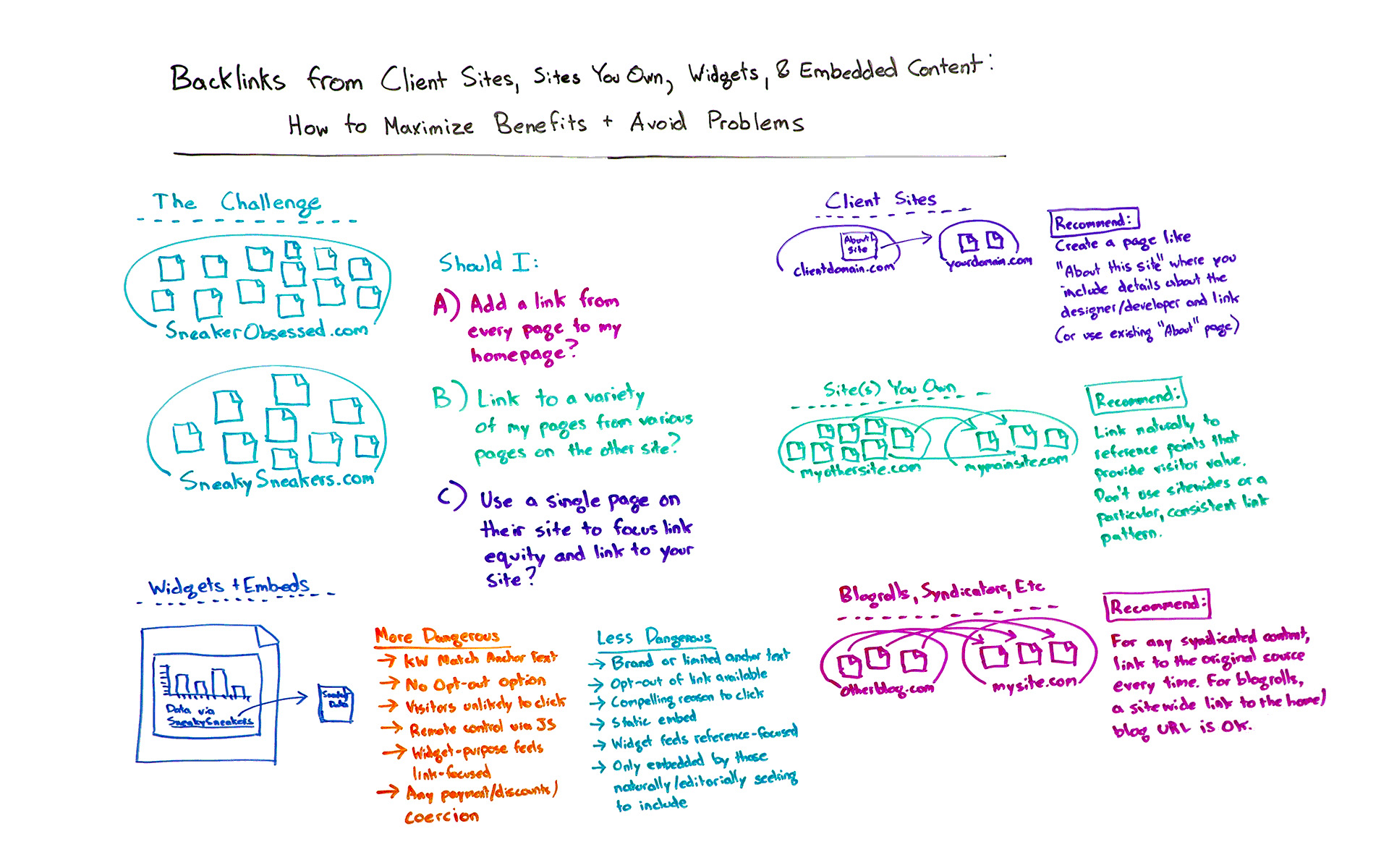
When it comes to certain kinds of backlinks, avoiding penalties can be a real gray area. How can you earn the benefits without gaining the scrutiny of Google? In this Whiteboard Friday, Rand will teach you which rules to follow to keep you safe and on the up-and-up, all while improving your link profile.


Click on the whiteboard image above to open a high-resolution version in a new tab!

Video Transcription

Howdy, Moz fans, and welcome to another edition of Whiteboard Friday. This week, we're going to chat about a question we see a lot here at Moz, around what you should do with websites that you maybe design or build or do work for, your clients' websites if you're an agency or consultant, or a web designer or builder, sites that you own but are not your primary website, and widgets and embeds, blogrolls, all these kinds of things where you control the link infrastructure, or could control it, and should you.

I think one of the challenges here is to understand that many folks have recognized that, over the years, widgets, embeds, links from client websites have gotten other sites penalized, potentially even your sites penalized over the years, because you had all these links that you control pointing back to places, and to Google that can look really sketchy. So I want to talk through some best practices about how you can get link benefit and value from these places without getting yourself into trouble.

The challenge


All right. The challenge here is let's say that I own sneakerobsessed.com, but it is not my primary website, or maybe it's a client's website. But I do own sneakysneakers.com, and I'm thinking to myself, "Gosh, you know the fact that I control, I have the login for the admin here, the site owner, or me, would be fine with linking from these pages to these pages. What should I do there? I don't want to get into trouble. But I would love to get some benefit, and I think that these links could help me. Should I:

A. Add a link from every page here to a bunch of pages here or to my homepage?

B. Should I link to a variety of my pages, like take a few of these and link them to my homepage, take a few others and link to some internal pages?

C. Should I use a single page on this website to link back to maybe my homepage?

The answer is kind of, it depends. It depends.

My recommendations

Client websites


If it is a client website or a site you've done work for, a site you designed or built, or your agency did, if you have clientdomain.com, what I'm going to suggest is that you take a page, the About page or a page you specifically built like About This Site, and you link to that page from the footer or the sidebar or the header. It's kind of one of those things that gets us linked to from a lot of pages. It's like the About page or the Contact page or the Privacy Policy, those kinds of things would get on clientdomain.com. You make that the only page where you intentionally specifically link back to your domain. You essentially have some blurb about, "Here are the details about the designer or developer, the technologies used on this website," those kinds of things. "If you would like to get in touch with the creator of this website, it is these folks over here," and that points over to you. That means you essentially have a site-wide link to one page, which is flowing a lot of link equity to that single page on your client's website, and that link is pointing over to you. This is very unlikely to be penalized. It's very likely to draw in clicks. It has all these beneficial properties.

Site(s) you own


For sites that you own, so myothersite.com and mymainsite.com, what I'm going to suggest here is that you don't have an intentional specific link strategy like, "Okay, one out of three pages I'm going to have a link. I'm going to have them link to these pages in particular. I'm going to have the anchor text always be this." Don't set up that kind of policy or process. Instead, I want you to focus on providing visitor value. Reference things on your main site when they are relevant to content on your other site, and this should happen naturally and organically.

Anytime you're referencing other content you've created or things that you've done, or recognition that you have, or someone else from your organization, you would naturally link over here. That's the way you should play it, not with some specific process and checklist. Anything that matches a very standard pattern is going to be easily recognized by Google, and that can get you into trouble.

Blogrolls, syndicators, etc.


With blogrolls and syndicators and those type of sites, it's a little less stringent, because blogrolls and syndicators have these unique attributes of basically saying it is the right thing to do for a blogroll when it exists usually on one of the sidebars of a blog, sometimes the blog's homepage, sometimes every page of a blog, it's usual for those to be kind of site-wide style links that always point back to the other blogs' websites' homepage or blog pages. That's okay here too. That is not a big problem.

The only time you get into real trouble is if that blogroll is essentially just a paid manipulation. It's technically a blog network. It's not that you're being editorially endorsed by someone else. They're only linking to you because you're linking to them. You get into that reciprocity challenge. That's not to say you should never link to anyone who has you in their blogroll either. It's just that this has to look natural and editorial to Google, or you can get in trouble.

Syndicators, by the way, it's okay to link from every syndicated piece of content back to the original piece of content. In fact, that's the way it should be. If you do your own syndication, like I do sometimes on Medium, where I put up my blog posts that I've already put on moz.com/rand on medium.com/randfish, then you should have each of those link back to their original pieces, and that's just fine.

Widgets & embeds


For widgets and embeds, things get a little dicier, and this is actually where we see a ton of penalties. Not to say that people don't have problems with their client sites too a lot of the time, but widgets and embeds have been particularly taken to task by Google in the recent past.

So the idea here is that you have this piece of content here that's being embedded from your site. So Sneaker Obsessed, maybe the guys there went to Sneaky Sneakers. They saw a data graph of Nike shoes versus Adidas shoes sales over the last 12 months, and they were like, "Oh, man. I really want to show that. That's awesome." In fact, there's a little "embed this graph onto your own website." So they took that, and they put it on there.

More dangerous

You get into more dangerous territory with this type of thing when in the link between here there's:


  • Keyword-matching anchor text

  • No opt-out option, meaning there's no way to say, "I don't want to include the link to the original"

  • When visitors are very unlikely to click that link; when there's no sort of, "Oh, why would I ever click on the attributed link from the embed?"

  • Remotely controlled via JavaScript, meaning you can remotely update this link and anchor text, that gets real sketchy.

  • Widget's purpose feels like it exists only for links, like it's not particularly useful, there's not a clear reason why this is a widget instead of just a graphic that other people can use or content they can syndicate, why make it a widget as opposed to something like a graph whose data can change, or an interactive content element, or a video player, or something like that?

  • Any sort of payment or discounts that you offer or coercion to get people to embed it gets you into more dangerous territory.

Less dangerous

You're much less likely to have problems if you:


  • Keep that anchor text branded or omitted entirely. It's non-branded anchor text. It's just your brand name, or it's very limited. It just says "Data Via," and via is the link itself.

  • Opt-out of the link is available, meaning that someone could say, "Yeah, I want to embed that. Include a link back to sneakysneakers.com? No. No, thank you."

  • There should be a compelling reason to click.

  • That embed is static.

  • It's not controlled by JavaScript.

  • The widget feels like it's reference-focused, so there's actually some value there.

  • Only embedded intentionally by those who are naturally and editorially choosing to include it.

That will keep you safe.

Hopefully, you will not encounter these problems. I think if you follow these rules, you'll be in the safe zone, and you'll also be benefiting from the link value that these can provide. I look forward to your comments. We'll see you again next week for another edition of Whiteboard Friday. Take care.

Video transcription by Speechpad.com


Sign up for The Moz Top 10, a semimonthly mailer updating you on the top ten hottest pieces of SEO news, tips, and rad links uncovered by the Moz team. Think of it as your exclusive digest of stuff you don't have time to hunt down but want to read!

Thursday, November 24, 2016

Featured Snippets: A Dead-Simple Tactic for Making Them Stick

Posted by ronell-smith


Dr. Pete throwing down at MozCon 2015, flexin' in his retro Flash t-shirt

At MozCon 2015, Dr. Pete delivered a gem that perked up my ears when he discussed Google's featured snippets during his talk, "Surviving Google: SEO in 2020":

"Let's say you're No. 5 in a competitive query, and you're trying to get from No. 5 to No.1. That is incredibly difficult; that takes a lot of money, a lot of links, a lot of authority. You might be able to jump past No. 1 to No. 0 with this just by matching the question better. So it may actually be easier to get from No. 5 to No. 0 than it is to get from No. 5 to No. 1 ... Be a better match. Be a better answer to the question. It's good for users."

Something about those 98 words perked my ears up, especially the last two sentences.

"Be a better answer to the question. It's good for users."

Those words rolled around in my head for months, though their impact wouldn't be felt until even later, when I began to see how prevalent featured snippets had become.

More than a year later, I'm now more convinced than ever that most brands should be making the attainment of featured snippets a priority.

Why?

Try as they might, most sites don't stand a chance of making it to the No.1 position in the SERPs. And today, with so much priority given to ads at the top of the page, above the organic results - not to mention the fact that most people don't recognize ads from organic results - even those who do reach the coveted position have to feel as though they've secured a pyrrhic victory.

In the year-plus since the presentation, rich answers have grown significantly, as depicted by the graph below from Stone Temple Consulting:


And in the span, a number of teams and individuals have made it their charge to better decipher featured snippets, specifically regarding what seems to influence their presence for certain queries, what types of snippets there are, how to optimize your content to make it more likely that you receive one, and what Google is likely looking for when a snippet is ultimately featured.

(For in-depth background information on featured snippets, see the Related Content section at the bottom of the post.)

But not a whole lot has been written on how to keep featured snippets once your brand has one. This fact hit me like a ton of bricks during MozCon 2016, when I listened to Rob Bucci of GetStat during his presentation Taking the Top Spot: How to Earn More Featured Snippets.

This post, which is a wellspring of some comments Bucci shared near the end of his presentation, will be focused very narrowly on how to keep a Featured Snippet once your brand has been fortunate enough to receive one.

The fast five 5 Ws of featured snippets

Before we dive into that aspect, let's briefly go over a few specifics, surrounding the nuts and bolts of featured snippets.


  • What are they and where do they come from? A featured snippet is the summation of an answer for a web searcher's query, typically taken from a website and includes a link to the site, the page title and the URL, according to GetStat.

  • Why should you care? You shouldn't, unless you care about being the top result on the page (snark for the win). Also, since the result can come from any brand on the first page, you have the potential to occupy two positions on page 1.

  • Who needs them? Any brand that desires organic reach, visibility, traffic and, yeah, uhm, conversions.

  • When do they show up? Any time a query is best answered in list, table, or graph form.

For your brand or any other, however, (a) featured snippets provide you with an easy opportunity to better compete against the competition, (b) can amount to a low-investment/high-reward opportunity, and (c) can give you a leg up on the competition.

Keeping your hard-earned featured snippet

One of the main reasons to attend conferences such as MozCon in person is the potential to hear a nugget of wisdom that would be missed in a recap blog, not properly conveyed in a tweet by an attendee, or glossed over when listening to the video after the event.

For example, Dr. Pete's quote from MozCon 2015 rang clear as a bell when I heard it while sitting in the audience, but I'm not sure I would have noticed it so readily had I simply watched the videos.

During the Q&A that followed Bucci's talk, he was asked about the real value of investing in featured snippets, a particular concern given that, in most cases, Google is serving up the content with very little benefit to the brand that houses it. (Unless the user clicks on the URL at the bottom of the content and visits the website.)

Bucci did far more than answer the question before him, however.

"Let's say I was [trying to teach someone] how to make toast. The snippet is, like, step 1 put the bread in the toaster; step 2, toast the bread; step 3, eat it, right? If I added a fourth or fifth step so that it was truncated in the snippet, i.e., they didn't get the full steps to make toast, people would be more likely to click on it to get the full results. Think about how you can optimize your snippets by making it so that you don't give away the entire farm in your snippet. They have to go through your website to get the information."

This tidbit got my attention for two reasons:


  • One of the biggest concerns brands have with regard to investing resources in trying to get a featured snippet is it does very little for the brand if the web searcher does not click on the URL and visit the site. Otherwise, the only entity that benefits to a significant degree is Google.

  • Churn, whereby brands earn and then lose a snippet, is a very real concern, too. Research by Stone Temple Consulting found that more than 55% of the queries that showed featured snippets in January 2016 "either didn't show a featured snippet in July 2015, OR shows a different URL for the featured snippet than it did in July 2015."


Image courtesy of Stone Temple Consulting, Google's Featured Snippets: Automated Continuous Improvement

How to smartly invest in featured snippets

By applying the logic in Bucci's quote, your brand can employ what I call next-level thinking.

Instead of simply thinking "How do I get a featured snippet?", think "How do I keep a featured snippet?" This is especially important since, as has been reported by STC, Bucci, and others, Google is likely using engagement metrics (e.g., clicks on the URL) as a factor in determining churn.

"By crafting your snippet content in a way that encourages people to click through to your site for the full detail, you can raise your CTR on that SERP," says Bucci. "That's the key thing."

As you can see from the result below, this result, drawn from the No.1 result on the page, is unlikely to warrant a click since all the needed information is right there for the taking.


However, in the result below, the web searcher will have to click the URL and visit the owner of the content's website to see the full list.

The important point to delivering a result that's churn-resistant, says Bucci, is to think strategically.

"The biggest recommendation I made that I think people are only now starting to pay attention to how to strategically use formatting to A) win snippets and B) create great user experiences on the SERP. People were just focused on getting any old snippet, but my advice was that they should look at the query space and measure the most common snippet formats. From there, they should optimize their snippets to match those formats, because Google is clearly indicating that they want to use those formats within the give."

Bucci made a great point, highlighting how we should pay attention to the formatting and content types - not simply the queries - that consistently show up as featured snippets. This, he says, amounts to Google telling us what they're looking to reward.

Don't overthink it. Dive in.

It's exciting to see brands jump into the fray, beginning to think seriously about featured snippets and how the organic elements can impact their brands.

Dr. Pete, who has remained a passionate advocate for brands taking a serious look at how to get and keep featured snippets, says it's essential that brands build their attainment into their overall process, not use it as a one-off tactic.

"I think the first step is to think in terms of questions, and build part of your keyword research around that. In natural language search, questions are increasingly common. Which questions are part of your conversion path? Don't discount them just because they're early in the funnel or part of the research phase. Find out if those questions are showing snippets and then think about ways to use those snippets as a teaser to draw people into your content and, hopefully, your funnel. Once you're ranking on page 1, it's about shaping your content to better answer the question. I think it helps to take an 'inverted pyramid' approach - lead with your most compelling question and a summary of your content, and then dive into the details. This makes for better snippets and grabs short attention spans."

One of the best ways to get started with featured snippets is by taking a step-by-step approach so that everyone on the team knows what you're going after, why, and its likely impact to the brand.

The graphic below is as specific and as detailed as you need to be to get started.


Image source: Stone Temple Consulting

Remember, though, like all aspects of online marketing, the endeavor will be iterative. What you gain, you might lose. But the process is invaluable.

You've still created something worthwhile

Hopefully, I've shared at least one small tidbit of information that has you excited about adding the attainment of featured snippets to your content marketing strategy.

For those of you who might be on the fence, wondering if the potential reward warrants the expense, Dr. Pete's words should nudge you in the right direction.

"I think content that answers questions is naturally compelling, which is what I like about optimizing for featured snippets ... Content that answers questions succinctly provides real value and builds a base of value for your visitors, regardless of where they arrive from. Even if you lose the featured snippet, you've built something useful."

It bears repeating:

"Even if you lose the featured snippet, you've built something useful."

Dr. Pete continued:

"Think of featured snippets as much like organic ranking - they aren't something Google awards you and then lets you keep until a new winner comes along. Featured snippets are generated by the algorithm in real time, just like organic rankings. You have to keep competing for them."

Has your brand experimented with featured snippets? If so, what's been the result?


Remember, Moz Pro will help you find and track featured snippets, as well as identify opportunities for acquiring them!


Sign up for The Moz Top 10, a semimonthly mailer updating you on the top ten hottest pieces of SEO news, tips, and rad links uncovered by the Moz team. Think of it as your exclusive digest of stuff you don't have time to hunt down but want to read!

Happy Thanksgiving from the Search Engine Watch & ClickZ team

To all of our readers and anyone else who has swung by accidentally thinking that this is an actual search engine (you'll be surprised at how often this happens; you won't be surprised at their most popular search terms), a very happy thanksgiving from us all!


We'll publish a couple more things for Europe tomorrow morning if you do happen to swing by the site. We apologise in advance for the pyjamas and meat-sweats. In the meantime, have a safe and peaceful Thanksgiving.


our-almost-traditional-thanksgiving-dinner

Monday, November 21, 2016

Announcing MozCon Local 2017!

Posted by George-Freitag

Now that location-based searches are growing about 50% faster than any other type of search on mobile, what are you going to do to make sure you're working on the front lines of this new, local-focused world? Well, you can start by joining us in Seattle for MozCon Local 2017 on February 27–28 for a day full of in-depth workshops from LocalU followed by an all-day conference from the top local speakers and brands.


You'll come away with another level of understanding related to local strategy, citations, reviews, SEO local link building, content creation, and more, along with some incredible, tactical advice to get you improving your local game the second you get home (or at least your first day back in the office). Plus, you'll be able to interact directly with speakers both during Q&A sessions and around the conference, and spend time getting to know your fellow local marketers.


So whether you're a marketer with a portfolio chock-full of local accounts or a brand with hundreds or thousands of locations, MozCon Local 2017 is where you need to be.


Buy your MozCon Local 2016 ticket!


Some of our great speakers (lots more coming!)


Darren Shaw


Whitespark


Darren Shaw is the president and founder of Whitespark, a company that builds software and provides services to help businesses with local search. He's widely regarded in the local SEO community as an innovator, one whose years of experience working with massive local data sets have given him uncommon insights into the inner workings of the world of citation-building and local search marketing. Darren has been working on the web for over 16 years and loves everything about local SEO.


Mike Blumenthal


GetFiveStars


Mike grew up sweeping floors in his family retail business at age 7 and saw the challenges of local marketing up close from an early age. Before co-founding GetFiveStars.com and LocalU.org he had been doing what we now know as Local SEO since 2005 and writing at his blog Understanding Google Local since 2006. He loves researching and understanding the issues that confront bricks and mortar storefronts and helping owners, agencies, and franchises tackle the challenges of the ever changing local marketing world.


Heather Physioc


VML


Heather Physioc is Assoc. Director of Organic Search at global digital ad agency VML, performing search engine optimization services for multinational brands like Electrolux/Frigidaire, Colgate-Palmolive, Hill's Pet Nutrition, Bridgestone, Wendy's and Bayer Animal Health. She has worked in digital marketing for 10 years. Physioc earned her Bachelor's of Journalism in Strategic Communication (Advertising) from the University of Missouri, and is currently pursuing an Executive Master's of Business Administration from Rockhurst University. She has spoken at AACS, WordCamp, KCSEMA, SEMPO Cities, PRSA Mid-Missouri and Omaha, TEDxKCWomen and more.


Willys DeVoll


Google


Willys Devoll is a content strategist for Google My Business and a member of the AdWords Content Strategy and Development team. He has also worked as a technical writer and content developer on Google for Work. In the past, DeVoll worked for Major League Baseball Advanced Media in communications, and at the Center for Spatial and Textual Analysis, where he contributed to research in the Literary Lab.


Rand Fishkin


Moz


Rand Fishkin uses the ludicrous title, Wizard of Moz. He's founder and former CEO of Moz, co-author of a pair of books on SEO, and co-founder of Inbound.org.


MozCon Local 2017 takes place at the Hyatt in downtown Seattle. In addition to coming home with a ton of knowledge, you'll also be coming home with some great swag to show off! Monday's workshops will have a snack break and networking time, and for Tuesday's conference your ticket includes breakfast, lunch, and two snack breaks. FINALLY, on the last night we'll have a networking party so you meet speakers, thought leaders, Mozzers, and other attendees. Networking without the 'net!


We're expecting around 200 people to join us, including speakers, Mozzers, and Local U staff. MozCon Local sold out last year, and we expect this year to sell out, as well, so you'll want to buy your ticket now!


Purchase your ticket now!


Our best early-bird prices:


Local U Workshop + MozCon Local Conference – Monday & Tuesday, February 27–28, 2017


$1,048 $748 for Early Bird Moz Subscriber & Local U Forum Members


$1,498 $1,148 for Early Bird General Admission


MozCon Local Conference – Tuesday, February 28, 2017


$599 $399 for Early Bird Moz Subscribers & Local U Forum Members


$899 $699 for Early Bird General Admission


Sign up for The Moz Top 10, a semimonthly mailer updating you on the top ten hottest pieces of SEO news, tips, and rad links uncovered by the Moz team. Think of it as your exclusive digest of stuff you don't have time to hunt down but want to read!

A 10-minute account audit to prevent SEM fires during the holidays

We've talked about it for weeks, and it's truly upon us now: holiday crunch time.


Your eyes are probably crossing with all the prep and must-dos, but if you're short on hours and would like to make sure to avert any ROI disasters before they happen, make sure to check these five items off your SEM list.


Vector timer icon


1) Pull a search query report over the last 60-90 days and optimize against it


We're looking for two specific buckets here:


  • Terms that have spent a significant amount of budget and racked up no (or few) conversions and high CPAs. These are terms you would not want your ad to appear on. You will want to create a shared negative list in your shared library and apply it to all of your campaigns. Then add in any negative terms based on poor performance that you find in the search query report.

  • Terms that are converting and have great CPAs. You will want to ensure you are using exact match to bid on these terms; this will allow you to maximize your control over top performers and push more volume and scale.


2) Check your ad group setup and limit the number of keywords


Ad groups should be limited to 1-10 keywords with close-knit themes; this allows you to tailor your ad copy as much as possible to keep the ad relevant to what the user is searching for.


If there are too many keywords with varying tokens, look into breaking these out into additional ad groups. It should go without saying that if you get more granular with the keywords in your ad groups, you should also be able to tailor your bidding to good effect.


3) Run a placement report over the last 60-90 days and add negatives


If you're running Google Display Network campaigns, the Placement Report is the GDN version of a search query report. Look for poor-performing placements that have a high number of clicks and plenty of cost – but no conversions.


Equally as important: look for placements that have high CPAs with low conversions. Add all of the placements that match those criteria to a negative placement shared list and apply that list to all of your GDN campaigns. You want to ensure your ads do not appear on these websites.


4) Do device analysis for search and display


If you're running search and GDN campaigns, you'll want to run device analyses for them both – and watch for different things.


For search, pull a device analysis on all campaigns to understand how mobile, tablet, and desktop perform. Develop bid modifiers at the campaign level to adjust bids according to performance (for example, if mobile CPAs tend to be 20% higher than desktop CPAs, you will want to apply a negative bid modifier to mobile devices to pay less for mobile CPCs).


For the GDN, keep in mind that 99% of the time, mobile on GDN doesn't work. Take a quick peek at performance, and if this is borne out, make sure to add in a -100% mobile modifier to turn it off.


5) Check for basic campaign-level best practices


Just to be sure there's nothing in your account that could cause a four-alarm fire, let's cover some campaign-level basics. (If you need to fix any one of these, do it now!)


  • Search and the GDN should be separate campaigns. If you are running both within one campaign, build out another and make sure you have your settings for “Search Network Only” or “Display Network”. You want to have the most control over these targeting types as they perform VERY differently from one another.

  • Don't settle for standard delivery for your best campaigns. Top performing campaigns should be set to “accelerated ad delivery” so you capitalize on as much high-converting traffic as you can.

  • Be smart about budget allocation. If you are budget capping, make sure you are allocating more budget to your top-performing campaigns so that they never run dry.


Now, will taking all of these steps make sure the 2016 holiday season is your best ever? Nope; they're just scratching the tip of the optimization iceberg. But if you found yourself saying “Oh, I should do that,” to any of the above, make sure those items take top priority, otherwise you're leaving yourself open to a big ROI leak when the traffic starts flooding in.


Good luck!

Sunday, November 20, 2016

Using Paid Media to Drive Loyalty & Advocacy - Whiteboard Friday

Posted by samanthanoble

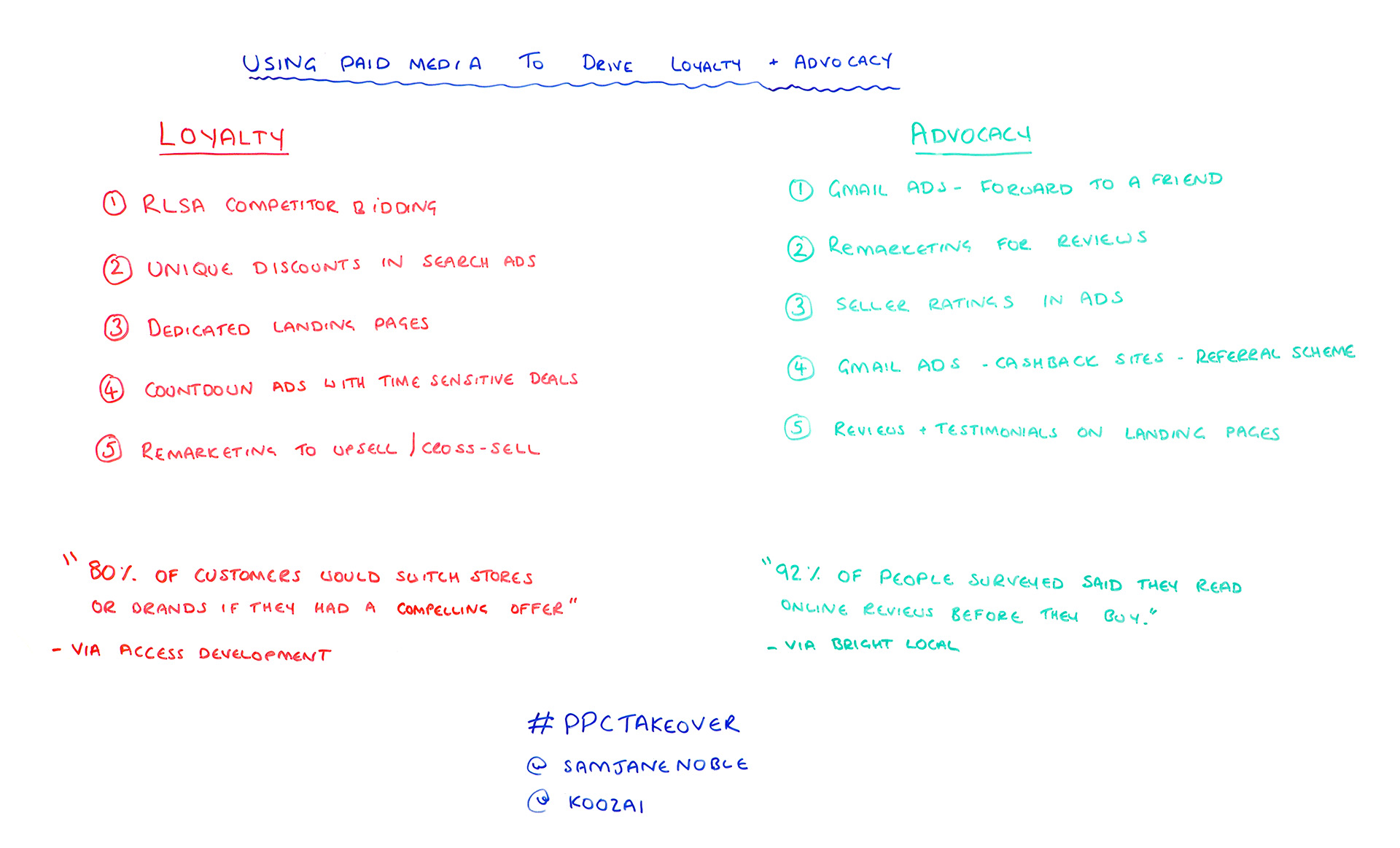
If you're not using your paid media in more creative ways than simply targeting customers at the buying stage, you've got a world of opportunity awaiting you. In today's Whiteboard Friday, we're delighted to have guest presenter Samantha Noble divulge 10 strategies for using your paid media to get your customers talking about you more and recommending you often.


Click on the whiteboard image above to open a high-resolution version in a new tab!

Video Transcription

Hi, my name's Samantha Noble, and I'm the Director of Strategy over at Koozai in the UK. We're a digital marketing agency specializing in paid media, SEO, and content marketing, and I'm really, really excited to be here today to share with you some tips on how we can use paid media to basically drive loyal customers and get those loyal customers recommending us to others.

I think what I've seen over the years, when it comes to paid media, is people tend to focus on the buying stage. They think that they're going to put money into a paid media channel and they're going to get return out of it, which is essentially true. But, when it comes to using paid media for loyalty and advocacy, it's something that I don't tend to see very often, and there's lots of stuff that we can do.

So over the next sort of 8 minutes or so, we're going to look at 10 different strategies. So it's five for loyalty and five for advocacy. And I'm hoping to be able to share with you some ideas and some inspiration that you can take away and use with the new paid media campaigns. So let's get started.

Loyalty

To start with, let's look at loyalty, and the first thing that we're going to look at is...

1. Use remarketing lists for search ads (RLSAs) to bid on competitor names

So let's say we've got a customer that has been with you time and time again or even they might have just bought from you once. If they then go back to Google and search for a competitor, you can then start displaying ads to that particular customer, at that moment in time, to try and encourage them to remain a loyal customer of yours by including a unique discount in the advert. So this really works well if the competitor names that you're using aren't trademarked. Otherwise, you will come up with a few sticky situations there that may not work. So it's worth looking to see whether you can try it or not. But it's a great way of trying to capture people at the stage when they may potentially be looking to go off and buy from a competitor.

2. Unique discounts within your search ads

So in the same way that we were talking about remarketing lists for search before, you can do this by either uploading a list of email addresses, so your CRM database of customers, or as a remarketing list for search ads, so your remarketing list of your existing customers. Now, when they go and search, again, for any of your other products or services that you could do, you can start to show them unique offers within the ads to say, "Hey, as a loyal customer, you get an extra 10% off if you buy a second purchase from us." So again, this can work really, really well to drive loyalty.

3. Dedicated landing pages

If you've got a customer that comes into a store that you know they come to you every single week and they buy from you time and time again, you're not going to greet them necessarily in the same way as what you would a first-time customer that you're not aware of. And this should be the same when it comes to search advertising. So, if you've got a unique customer that's bought from you time and time again, why not show them a landing page, when they land on the site, that is targeted to them, that's talking in a language that shows that you're talking to them as a loyal customer rather than as a first-time buyer? So again, you can do this with customer match lists or with remarketing lists for search.

4. Countdown ads with time-sensitive deals

So countdown ads are the ads where you see time is ticking down if there's a unique offer that's going to expire in, say, a weeks' time. If you've got a customer that's bought from you once and you want to try and encourage a repeat purchase, why not show them a limited-time offer, so that it's saying, "Look, if you buy from us a second time within the next week, month, two months..." whatever it is that you want to put in there, and show the offer is ticking down, this can create a real sense of urgency and drive people to buy from you and make a second purchase.

5. Remarketing to cross-sell or upsell to customers

This works really well if you've got a product or a service that people can buy from you again, or it might be that you've got a product - so let's say a mobile phone provider as an example. Somebody might have bought a mobile phone. The next logical purchase for that particular customer could be that they're looking to get a cover or a case for that phone. If you know that somebody's bought a particular model or make of a phone, why not start following them around with remarketing ads, highlighting the fact that you also sell covers and cases? This can be a really good way of driving extra loyalty from people that have just bought from you.


The reason that I think it's important to consider loyalty, when it comes to paid, is there was a study done via Access Development, that basically shows that 80% of customers would actually consider switching brands or stores if they were offered the right compelling discount. So I think that's just really, really important to remember that even though you've worked hard to gain a customer, they can still leave you and go to a competitor.

Advocacy


So, moving on from here, let's look at some ways that we can use advocacy, and what I mean by advocacy is you've got a loyal customer base. You've spent all this money and time and resource growing that audience. What we want to do now is help them to market you, help them to do that word-of-mouth marketing and actually recommend you to others. And there are five ways that we're going to look through in terms of how we can drive advocacy using paid media.


1. Gmail ads

Gmail ads are really good if you are using them and targeting them at the right people. And I've seen this work really well if you're trying to promote like forward to a friend discounts. So if you've got a list of all your customers, whether it's again a remarketing list or a customer matched list of email addresses, upload those. When those particular customers are looking at their emails on Gmail and they're not using a business Gmail account, and they're in the Promotions tab, they can see various ads at the top. So you're typically seeing two ads at the moment at the top of Gmail.

And in here, what we can do is we can show an advert that's saying, "Hey, as a loyal customer of ours, why not recommend us to others?" You can show them and you can give them a unique discount code to pass on to their friends or family. So you can do this and try and encourage people, when they're opening up that ad, you can make it look like a nice HTML advert, a nice HTML page, and try and drive them to say, "Hey, forward this discount on to a friend, and your friends or family can benefit from this unique offer," that we're offering to them.

2. Remarketing for reviews

So similar to what we were talking about before, in terms of using remarketing to generate upsells and cross-sells, you can also do remarketing to try and encourage your existing audience base to go and leave a review of your product or service. And whether that's on your own website or whether you're using a third-party review site, if you are using a third-party review site, I'd recommend that you make sure that it's a site that Google can aggregate that data from, because that's going to come on to the seller ratings that we're going to look at next. But you can follow people around saying, "Hey, how did you find your experience with us? What was your product like? What was the service like?" And try and encourage them to go and leave you a review so that other people can then experience what your existing customer base had kind of experienced from their product or service they've purchased from you.

3. Seller ratings

So seller ratings are the ads where you see the stars in the listings, and these can be really, really good especially if your competitors aren't doing this. There is a stipulation. I think it's 120 reviews you need in the past 12 months, so you need to make sure that you're getting reviews frequently enough. But Google will then aggregate that data and pool that within your search ads. And as I say, if your competitors aren't doing it and you are, and you're seeing that you've got a four or a five-star rating, that really entices people to click through and it gives that sense of, "Yeah, they're a good company to buy from, so I'm going to go and investigate them more."

4. Gmails ads – cashback sites – referral scheme

If you've got a recommend-a-friend scheme or refer-a-friend scheme that you're wanting to try and promote, people that are signed up to recommend-a-friend-type schemes are kind of looking to get something in exchange for what they're doing. So the idea here is what you can do is you can upload a load of cashback site domains. So it could be all of the different cashback sites in a particular niche or just the cashback sites that you want to go after. Upload all of those as keywords, and if somebody is receiving an email from a cashback site, your ad can say at the top, "Hey, we've got this great refer-a-friend scheme. You can earn money for doing X, Y, and Z with us." So it's a way of tapping in to not necessarily your existing customer base, but trying to tap in to a new audience and get them referring you to others as well, and this can work really, really well.

5. Reviews + testimonials on landing pages

Final idea that we've got here is making sure that the same, what we were talking about before, about using dedicated landing pages for our loyal customers, what we also want to do on the landing pages for new customers that are coming into a site, is make sure that we're talking about testimonials from our existing customer base, making sure that we put the reviews on there. People buy from people. I'm hearing the term "human-to-human" bandied around a lot recently. So rather than B2C, B2B, it's H2H. And this is really, really important because people do buy from people, and people like to feel that the product or service that they're buying has helped somebody else or somebody else has enjoyed that particular product. So making sure that you're using reviews and testimonials on landing pages can really help boost your conversion rate.


Now the reason that advocacy is really important, again, another study that was done via Bright Local, this basically shows that 92% of people that they surveyed said that they regularly read online reviews. So it's really important, in this day and age, that we focus on driving reviews and getting our existing customers to recommend us to others.

So, as I said, there's lots of other ways that we can use paid media to target loyalty and advocacy, and I'd love to hear what you guys are doing, what other ideas have worked for you, what strategies have worked well for you. If you can leave those in the comments below, that will be fantastic. If you've got any questions or you want to run anything past me, then you can get me on my Twitter handle, which is @samjanenoble, and thank you very, very much for having me on Whiteboard Friday.

Video transcription by Speechpad.com


Sign up for The Moz Top 10, a semimonthly mailer updating you on the top ten hottest pieces of SEO news, tips, and rad links uncovered by the Moz team. Think of it as your exclusive digest of stuff you don't have time to hunt down but want to read!